What to Do When Your Garage Door Won't Close
Last Updated: November 2, 2026
Quick Summary
When a garage door won't close, first stop and clear the path, since a small obstacle can trigger the safety reversal. Then clean and align the photo-eye sensors, check the wall control and remote, and inspect the tracks, rollers, and bottom seal for obstructions. Call a professional for any broken spring, frayed cable, or off-track door.
- Never reach under or into a door that is moving or could start moving.
- Wipe both photo-eye sensor lenses with a soft, dry cloth and check alignment.
- If the wall control works but the remote does not, replace the remote battery first.
- Never disconnect or bypass the photo-eye sensors to force the door to close.
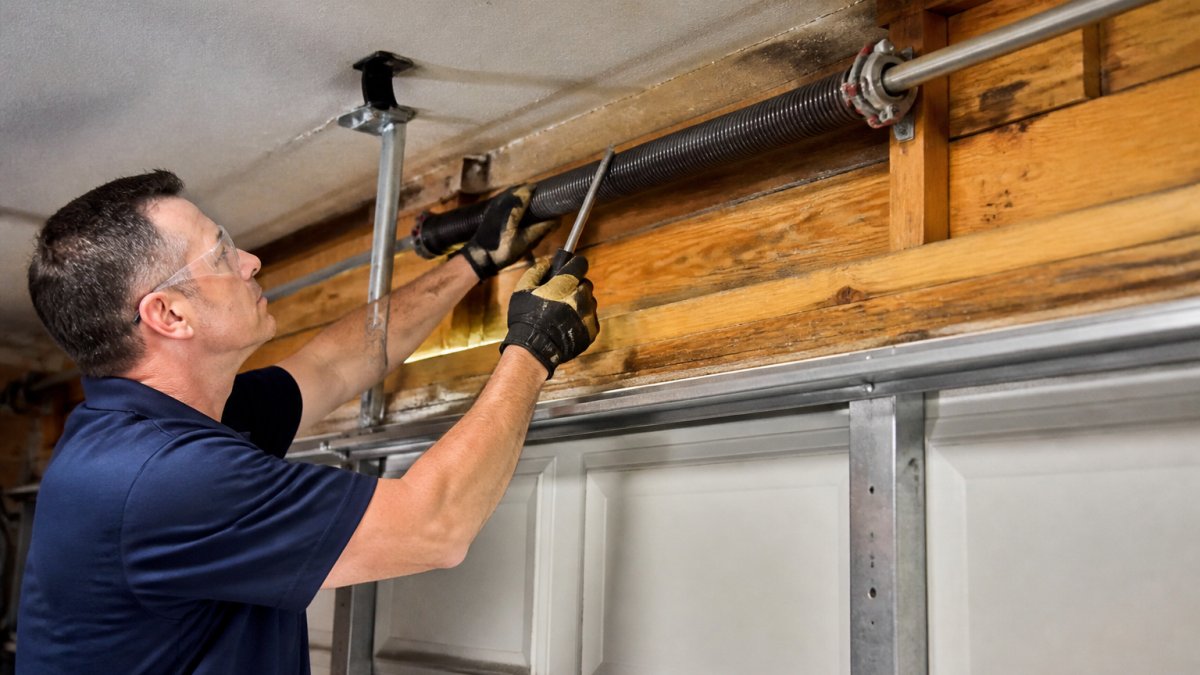
- Do not cut, loosen, or attempt to rewind a spring or cable; call a trained technician.
Table of Contents
- Start With Safety: Stop, Clear the Area, and Check for Obstructions
- Check the Photo-Eye Safety Sensors and Their Indicator Lights
- Test the Wall Control and Remote Transmitter
- Inspect the Tracks, Rollers, and Bottom Seal for Obstructions
- How to Adjust Garage Door Travel Limits So It Closes Completely
- When the Door Goes Back Up or Stops Partway, and When to Call a Professional
- Frequently Asked Questions
Start With Safety: Stop, Clear the Area, and Check for Obstructions
When a garage door won't close, it is more than an annoyance. The first step is always the same: stop, step back, and make the area safe.
Before you touch anything, clear the path. Remove toys, boxes, bikes, and anything else on the floor under the door or along the sensor beam. A small obstacle can trigger the safety reversal every time.
Keep these safety rules in mind:
- Never reach under or into a door that is moving or could start moving.
- Keep children and pets away from the door and the opener controls.
- If the door is damaged, off its tracks, or sagging, stop and call a professional. Learn how to tell a broken spring from a fixable fault before you decide whether to attempt any repair yourself.
The U.S. Consumer Product Safety Commission advises that if an automatic garage door fails to reverse, it should be adjusted according to the owner's manual or inspected by a professional repairer (U.S. Consumer Product Safety Commission guidance on automatic garage door openers). Treat a door that will not reverse as a serious hazard, not a minor glitch (CPSC Safety Standard Targets Garage Door Deaths).
Check the Photo-Eye Safety Sensors and Their Indicator Lights
Most problems with a garage door that won't close start at the photo-eye sensors: two small devices a few inches above the floor on each side of the door. One sends an invisible beam to the other, and if the beam is broken while the door closes, the door reverses, the safety feature working as designed.
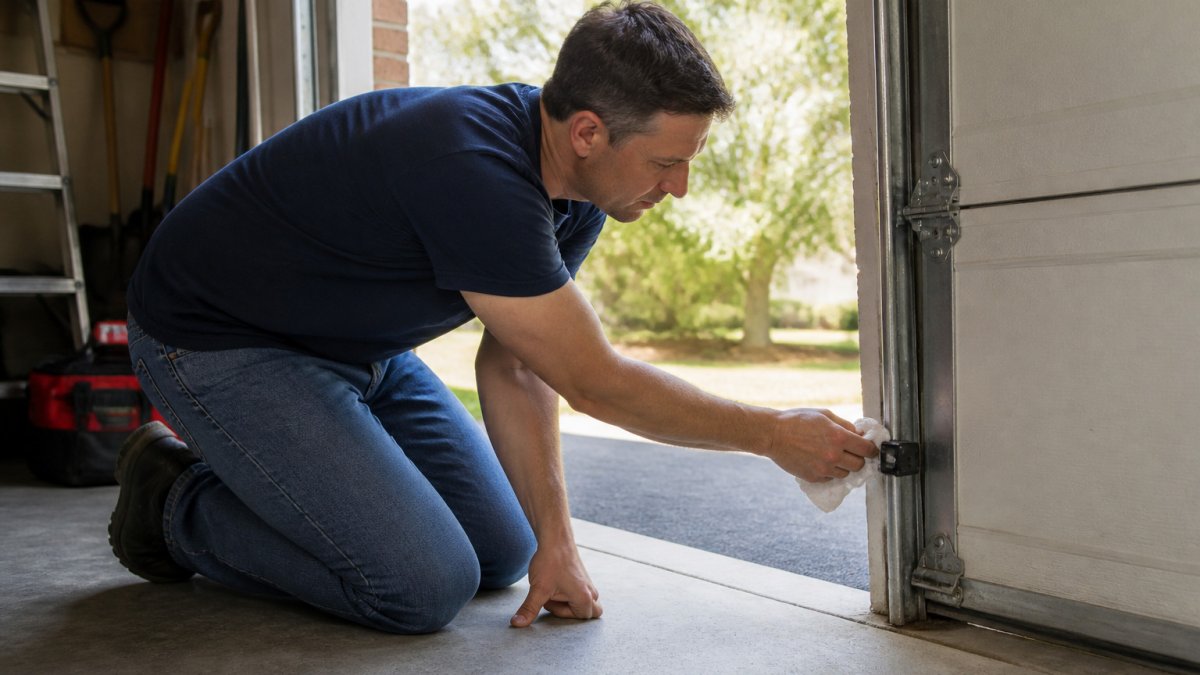
Start with a quick inspection:
- Wipe both sensor lenses with a soft, dry cloth.
- Clear cobwebs, dust, and debris from the sensor housings.
- Check that nothing blocks the beam between the two sensors.
Next, check alignment. The two sensors should face each other directly. Many systems show status with indicator lights: steady usually means the beam is connected, while blinking or missing often means misalignment, blockage, or bad wiring.
Sunlight is a common cause of intermittent faults. Bright direct sun can wash out the infrared beam, so the door may close one day and fail the next.
The table below summarises the main checks for a photo-eye sensor problem.
| Check | What to do | Note |
|---|---|---|
| Lens | Wipe both lenses with a soft, dry cloth | Remove dust and cobwebs |
| Beam path | Confirm nothing blocks the beam | A small object can trigger reversal |
| Mounting | Check sensors are firmly mounted | Wires should be intact |
| Alignment | Make sure the two sensors face each other | Misalignment is a common fault |
| Indicator lights | Compare steady or blinking pattern to the manual | Patterns differ by manufacturer |
| Sunlight | Shade the sensor or adjust its angle | Bright sun can wash out the beam |
Test the Wall Control and Remote Transmitter
The wall control and the remote take different paths to the same opener, making them a useful diagnostic pair.
Garage Door Won't Close? Try This Easy Fix!
Morgan Inspection Services
Run the tests in this order:
- Press the wall control. If the door closes normally, the opener, sensors, and door hardware are working, and the problem is in the remote or its signal path.
- Press the remote from close range. If it fails here but the wall control works, replace the remote battery first, then re-pair the remote to the opener using the manual's pairing procedure.
- Try a second remote or the keypad, if you have one. If none of the wireless controls work but the wall control does, suspect the opener's radio receiver or a pairing issue rather than the door itself.
- Press and hold the wall control. If the door closes only while the button is held, the opener has entered hold-to-close mode because it cannot confirm the photo-eye beam is clear. Go back to the sensor check before adjusting anything else.
A few behaviors are easy to misread. An intermittent remote often has a weak battery or a metal object, such as a tool cabinet or foil-faced insulation, interfering with the signal.
Watch out: do not disconnect or bypass the photo-eye sensors to force the door to close.
If the door still will not close: safe temporary security
When the door cannot be closed and you are waiting on a technician, secure the opening without disabling safety features:
- Lower the door by hand only if the opener has been released and the door moves freely; never force a binding door.
- If the door will not come down, close off the opening from inside with a sturdy barrier and keep the area lit.
- Lock the entry door between the garage and the house, and move valuables out of the garage.
Once the door closes reliably from both the wall control and the remote, test the safety reversal by placing a small object in the door's path and confirming the door reverses on contact. That confirms the fix, not just the symptom.
Inspect the Tracks, Rollers, and Bottom Seal for Obstructions
A door can fail to close even when the opener and sensors work fine. The door's own hardware may be the problem. Look at the parts that guide the door along its path:
- Tracks: Check both vertical and horizontal tracks for dirt, debris, bent sections, or loose bolts. Clear any buildup with a dry cloth. Do not force the door past a bent track.
- Rollers: Look for worn, cracked, or stuck rollers. A roller that will not turn can cause the door to bind.
- Bottom seal: Check the rubber seal along the bottom of the door for objects, buildup, or tears that could catch on the floor.
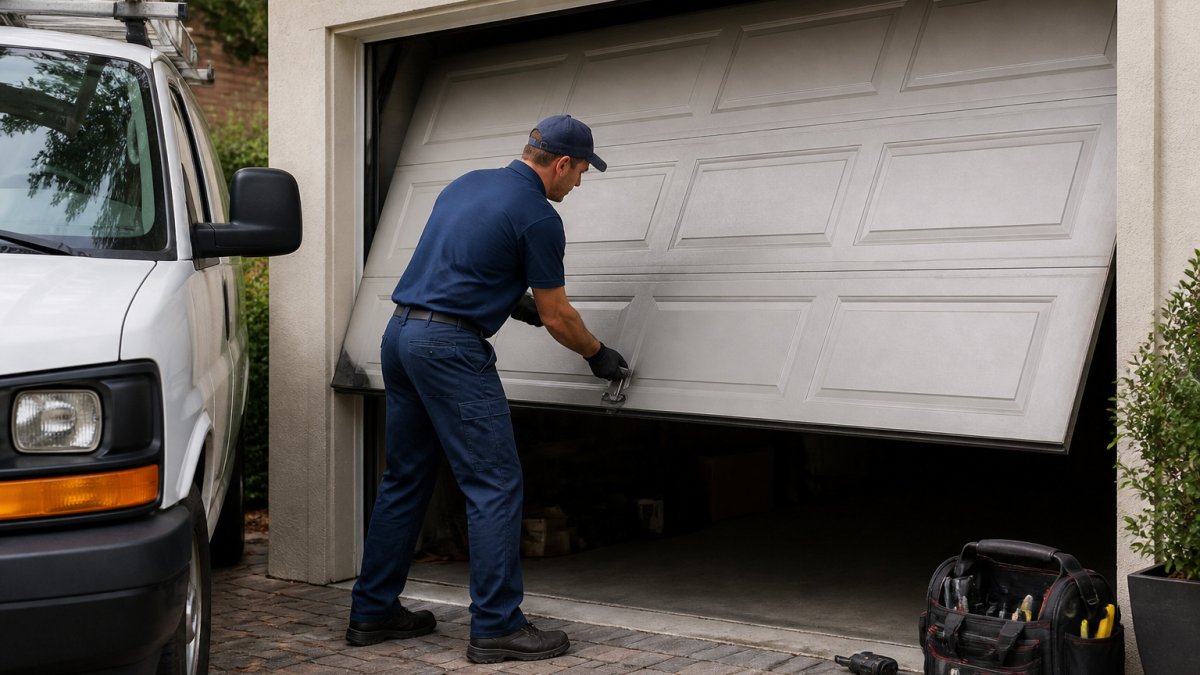
Watch the door move while you look. A door that stops, shudders, or leans to one side needs professional attention. Those signs can point to spring, cable, or track problems that are not safe for a homeowner to repair.
How to Adjust Garage Door Travel Limits So It Closes Completely
Many doors stop short of fully closing because the travel limits are set incorrectly. The limit settings tell the opener where the door should stop when fully closed; if they are off, the door may stop partway down or reverse just before reaching the floor.
Follow these general steps:
- Locate the limit adjustment screws or dials on the opener. The owner's manual shows where they are.
- Close the door using the wall control and watch where it stops.
- Turn the close-limit adjustment slightly to lower the stopping point.
- Test the door after each small change.
- Repeat until the door closes fully and stops without straining.
Make small adjustments and test often. Turning a limit too far can cause the door to slam into the floor or fail to reverse when it should, which is a safety risk. If you are unsure, stop and call a professional.
When the Door Goes Back Up or Stops Partway, and When to Call a Professional
Most closing failures fall into a few recognizable patterns.
The door stops partway down and stays there. This usually points to a travel-limit setting that is too short, a binding track or roller, or an obstruction on the way down.
The door closes only while you hold the wall button. This is the opener's hold-to-close mode, a deliberate safety fallback most manufacturers activate when the photo-eye circuit is open, disconnected, or faulty.
Repair-versus-DIY decision guide
Safe for most homeowners to check and fix:
- Cleaning, aligning, and re-seating photo-eye sensors.
- Replacing remote batteries and re-pairing remotes.
- Clearing debris from tracks and the bottom seal.
Stop and call a trained technician when you see any of these: Find emergency garage door service that answers fast if the door is stuck open and leaves the property exposed.
- A broken, stretched, or visibly twisted spring, or a door that suddenly feels much heavier when lifted by hand.
- Cables that are frayed, slack, or off their drums.
- A door that is off its tracks, sagging, or leaning to one side.
Watch out: springs and cables store enough tension to cause serious injury, and there is no homeowner-safe way to adjust or release them.
For an urgent situation, such as a door that will not close and leaves the property open, ask for after-hours or same-day service and confirm the response window before booking.
Frequently Asked Questions
Why is my garage door refusing to close?
The most common causes are a safety reversal triggered by the photo-eye sensors, an object blocking the door path, or a track or roller obstruction. Start by checking the sensors for debris or misalignment and confirming the indicator lights are steady. Next, clear the door path and inspect the tracks. If the door still will not close, it may need a limit adjustment or a professional inspection. Never bypass or tape over the safety sensors, since they are designed to prevent injury and serious damage.
Why won't my garage door close unless I hold the button down?
This usually means the opener is in hold-to-close mode, or the safety sensors are detecting a fault that prevents automatic closing. Many openers switch to this mode when a sensor is misaligned or obstructed. Check the photo-eye sensors first, making sure both lenses are clean, aligned, and not exposed to direct sunlight. If the sensors are clear and aligned, the opener's travel limit or force settings may need adjustment, which is a task best handled by a qualified technician.
Why won't my garage door close with the remote but open normally?
If the door opens with the remote but will not close, the problem is often the closing sensors, the wall control, or the remote's relationship to the closing cycle. Test the wall control button to see whether the door closes from that switch. If it does, the remote transmitter may have weak batteries or may need reprogramming. If neither control closes the door, the safety sensors are the likely cause, and the indicator lights will often show a fault pattern.
What should I do if I can't manually close my garage door?
Do not force the door closed by pulling hard or lifting it over the opener's resistance, as this can damage the springs, cables, or opener. Disconnect the opener using the emergency release cord only if the door is safe to move by hand, and keep people and vehicles clear of the door path. If the door is unbalanced, binding, or the spring is broken, stop and call a professional. In the meantime, use a secure temporary measure such as parking inside, rather than leaving the door open overnight.