How Much Does Residential Garage Door Installation Cost in 2026?
Last Updated: October 28, 2026
Quick Summary
Residential garage door installation cost averages $1,854 in late 2026, including materials, labor, and supplies, according to Alan's Factory Outlet's 2026 price guide. The basic installation range for a single door runs $969 to $1,573, per Homewyse's 2026 cost data, which covers the mechanical work but not the door itself. Expert labor typically accounts for $200 to $600 per door.
- Single garage doors cost $900 to $1,700 installed, while double doors cost $1,600 to $3,000 installed.
- Carriage and glass styles run $2,500 to $6,000+ installed, per Garage Door of Brunswick's 2026 pricing.
- Most single-door installations with an opener take four to six hours; a double door with custom panels takes a full day.
- An automatic opener adds $150 to $500 for the opener plus $30 to $100 for hardware.
- Compare quotes on itemized scope, door and opener models, and warranty and safety before comparing the bottom line.
Table of Contents
- What Residential Garage Door Installation Cost Looks Like in 2026
- Average Cost to Install a Garage Door, Broken Down
- Garage Door Cost by Material and Style
- Single-Car vs. Double-Car: How Door Size Changes the Price
- Garage Door Opener Installation Cost and What It Adds
- What a Garage Door Installation Estimate Should Include
- Garage Door Installation Time and How to Prepare
- Repair or Replace? How to Decide Before You Spend
- Why Local Prices Vary and How to Compare Quotes
- Schedule a Residential Garage Door Installation Estimate
- Frequently Asked Questions
What Residential Garage Door Installation Cost Looks Like in 2026
Residential garage door installation cost averages $1,854 in late 2026, including materials, labor, and supplies, according to Alan's Factory Outlet's 2026 price guide.
Average Cost to Install a Garage Door, Broken Down
The basic installation range for a single door runs $969 to $1,573, per Homewyse's 2026 cost data. That figure covers the mechanical work, not the door itself, which is exactly why the two numbers get conflated in contractor conversations.
Expert labor typically accounts for $200 to $600 per door. Materials and supplies make up the rest.
Materials, Labor, and Supplies Line by Line
An honest garage door installation estimate breaks into seven parts, and each should carry its own number before you sign. The table below shows what each line covers and the typical range most homeowners see on a single-door, mid-grade steel installation. Treat the ranges as planning bands, not quotes, your opening, door model, and local labor market move every line.
| Line Item | What It Covers | Typical Range (Single Door) |
|---|---|---|
| Door and panels | Steel, wood, or aluminum sections, plus track and basic hardware | $400-$1,500 |
| Installation labor | Track, spring, and panel alignment; tuning and balance | $200-$600 |
| Removal and disposal | Detaching, hauling, and landfill or recycling fees for the old door | $50-$250 |
| Opener and hardware | Motor, rails, remotes, wall button, safety sensors, wiring | $150-$500 (opener) + $30-$100 (hardware) |
| Site prep and framing | Header repairs, out-of-square opening correction, trim work | $0-$400 (conditional) |
| Permit | Local permit fee where the jurisdiction requires one | $0-$250 |
| Sales tax | State and local tax on materials and taxable labor | Varies by jurisdiction |
How to Read the Numbers
Two mechanisms explain most of the spread. First, the door itself is the largest single line, so material upgrades, insulated panels, carriage styling, glass lites, move the total more than any labor difference. Second, conditional lines like site prep and permits are where bids diverge most: one installer may assume your framing is sound and another may price a header repair up front. Ask each bidder to state their assumptions in writing so you are comparing the same scope.
Garage Door Cost by Material and Style
Material drives the widest price swing of any single decision. A standard steel garage door sits at the entry point, while carriage and glass styles now run $2,500 to $6,000+ installed, per Garage Door of Brunswick's 2026 pricing.
Steel remains the default for most homes because it balances durability and price. Insulated steel doors cost more than uninsulated panels but change how the garage feels in summer and winter. Wood offers warmth and curb appeal at a premium, with more maintenance. Aluminum suits coastal humidity. Glass and carriage-house designs sit at the top of the range.
Style matters too. A six-panel door and a carriage-style door can use identical hardware and still land hundreds of dollars apart, because the panel profiles and decorative trim differ.
Single-Car vs. Double-Car: How Door Size Changes the Price
Size is the second-biggest lever. Single garage doors cost $900 to $1,700 installed, while double garage doors cost $1,600 to $3,000 installed, according to Apple Door's 2026 cost breakdown.
A double door doesn't simply double the single-door price. It uses wider panels, heavier springs, and a larger opener, but the labor hours don't scale linearly. That's why per-door pricing on a two-car garage often looks better than a single-door quote.
Watch out: a "double-car" price quoted without confirming the actual opening width can hide a custom-size surcharge. Measure the opening before you compare quotes.
Garage Door Opener Installation Cost and What It Adds
Garage door opener installation cost is a separate line from the door itself, and it's the item homeowners most often forget to budget. An automatic opener adds the motor, rails, safety sensors, and wiring, plus the labor to mount and calibrate it.
Every residential operator sold today must meet federal entrapment protection requirements under 16 CFR Part 1211, which mandate primary entrapment protection. That's not a selling point, it's the law, and any installer who skips sensor calibration is cutting a corner you'll pay for later.
If your existing opener works and is compliant, reusing it can trim the total. If it predates current safety standards, replacing it alongside the door usually costs less than two separate service visits.
What a Garage Door Installation Estimate Should Include
A complete garage door installation estimate lists the door model and R-value, the opener model if included, labor hours, removal and disposal, permit handling where required, and the warranty terms in writing.
Here's the checklist we'd use to grade any quote:
- Door manufacturer, model number, and panel thickness stated
- Insulation value (R-value) listed if the door is insulated
- Labor broken out separately from materials
- Removal and disposal of the existing door priced explicitly
- Opener model and safety sensor calibration included
- Warranty length on springs, panels, and labor
- Payment schedule tied to completion, not deposit-heavy
- Written confirmation of the installation date and window
If two of those lines are missing, ask why before you compare the bottom line.
Garage Door Installation Time and How to Prepare
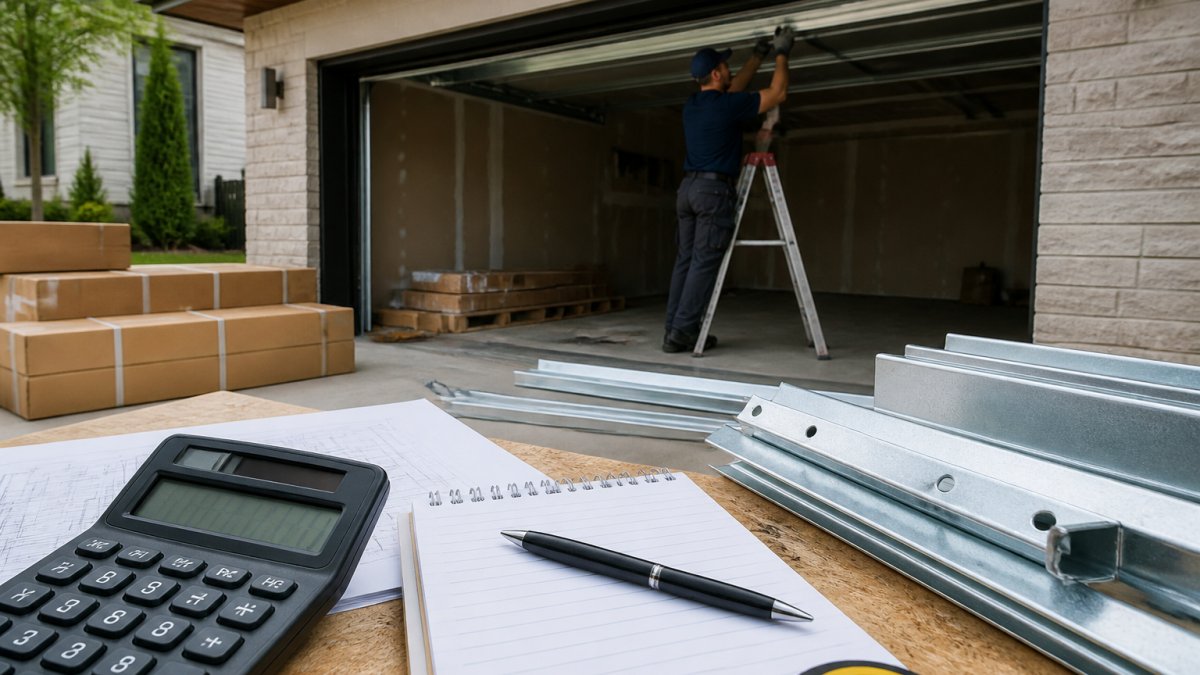
Most residential installations take four to six hours for a single door with an opener, and a full day for a double door with custom panels. Preparation is simple: clear the garage floor, move vehicles out, and confirm the driveway has room for a truck and staging area.
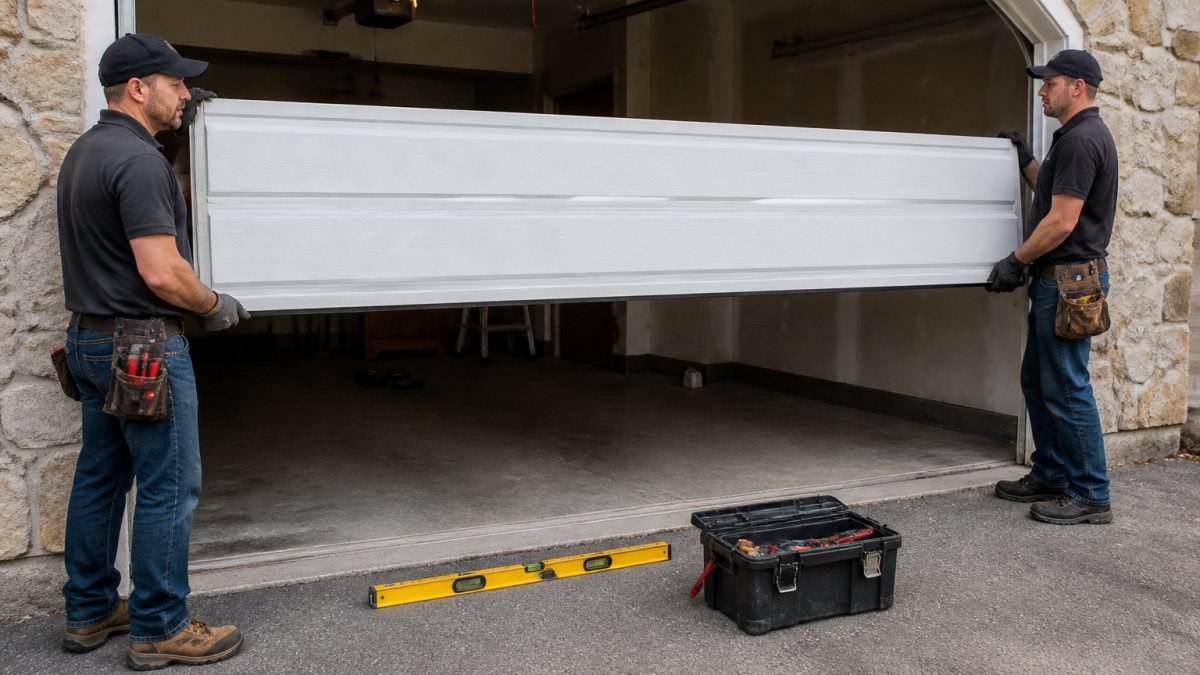
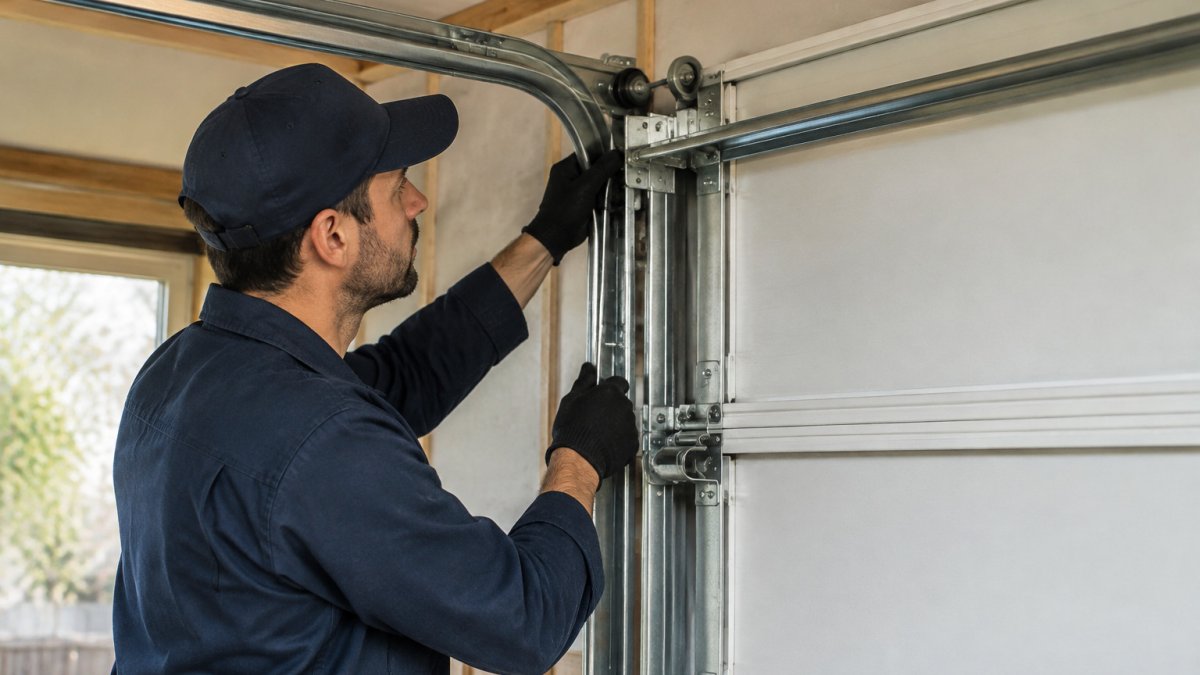
Spring and track work is where timelines slip. If the existing framing is out of square or the header is damaged, the crew has to correct it before hanging panels. Ask your installer to inspect the opening during the estimate so the day-of surprises stay small.
Repair or Replace? How to Decide Before You Spend
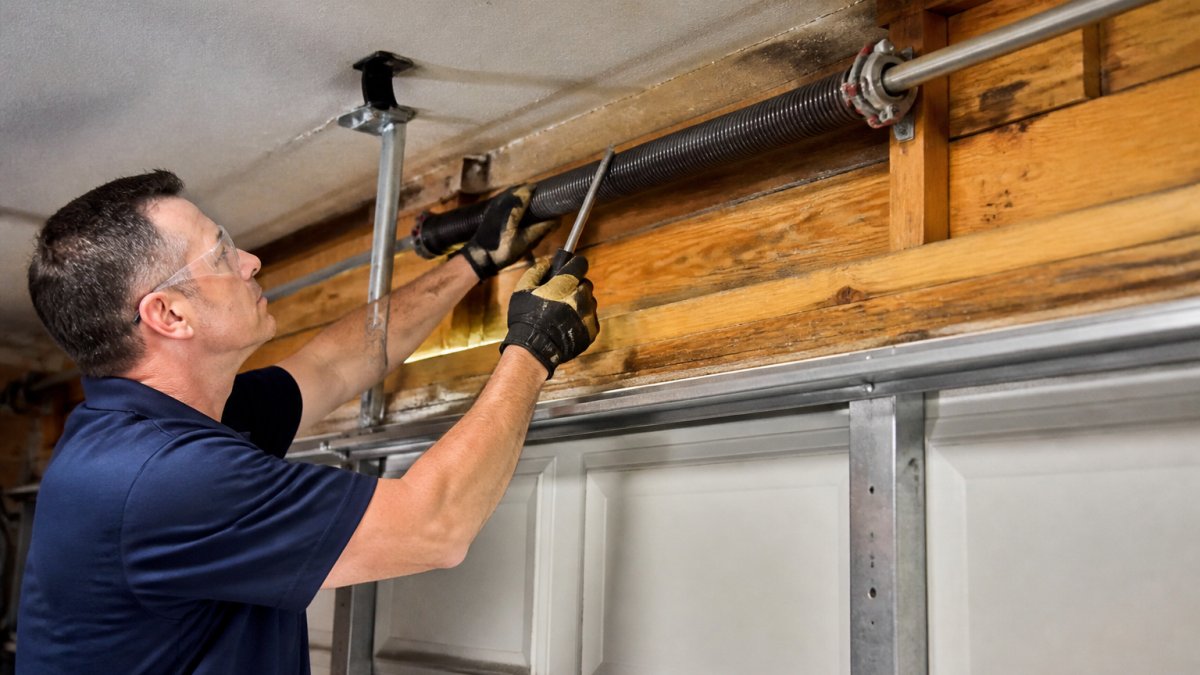
Repair wins when the door structure is sound and the failure is mechanical: a snapped spring, a bent track, a worn roller, or a misaligned sensor. Replace when panels are dented or rusted through, the door is out of warranty, or repeated repairs are catching up to the cost of a new unit.
For safe spring-repair steps and clear guidance on when to call a pro, see our guide on how to fix a garage door spring.
Why Local Prices Vary and How to Compare Quotes
Regional price variation is real, and it is driven by four measurable inputs: labor rates, permit requirements, travel distance, and local demand. Two quotes for the same door model can differ by hundreds of dollars purely on labor, and the same door can land at very different totals in a dense metro versus a rural service area.
What Moves the Local Number
- Labor rates. Crew wages and overhead vary by market. A high-cost metro can push labor toward the top of the $200-$600 per-door band, while lower-cost areas sit near the bottom.
- Permits. Some jurisdictions require a permit for door replacement and some do not. Where a permit is required, the fee and inspection add a line item that a neighboring town may not have.
- Travel and staging. Installers who must travel farther, or who face limited driveway access, build that time into the quote.
- Local demand. After a storm season or during a remodeling surge, scheduling pressure can raise prices; in slower periods, installers are more willing to bundle.
Because these inputs shift by ZIP code, a single national average is a starting point, not a budget. Ask each installer what their labor rate is and whether a permit is included, then compare those two answers before you compare the bottom line.
A Three-Axis Quote Comparison
Compare quotes on three axes, in this order:
- Itemized scope. Does the bid list door model, labor, removal, disposal, opener, permit, and tax separately? If not, rewrite it into that format before comparing.
- Door and opener models. Confirm the manufacturer, model number, panel thickness, and R-value. A cheaper bid on a thinner panel is not the same product.
- Warranty and safety. Check spring, panel, and labor warranty lengths, and confirm the opener meets federal entrapment protection requirements under 16 CFR Part 1211.
A cheaper quote that omits disposal or uses a lower-grade spring is not cheaper, it is a smaller scope. The fair comparison is the bid that lists every line and matches your chosen door and opener.
Bundling and Timing
Bundling helps. Installation costs are often more reasonable when bundled with the door purchase, per Raynor Door Authority's 2026 guidance, because the crew is already on site. Ask each installer whether their quote reflects a bundled price, and ask whether scheduling in an off-peak window changes the number. Neither question costs anything, and both can surface a few hundred dollars of flexibility.
Schedule a Residential Garage Door Installation Estimate
Getting a firm number starts with a site visit, not a phone quote. Measurements, framing condition, and opener compatibility all change the total, and no honest installer will lock a price without seeing the opening.
Eidelberg Garage Doors has served homeowners since 1945, with more than 10,000 repeat customers and installation, repair, and emergency service available seven days a week. Browse our garage door tips and guides to prepare, or call 718-645-2930 to schedule your estimate.
Frequently Asked Questions
How much does it cost to install a residential garage door?
In 2026, the average residential garage door installation cost is about $1,854 including materials, labor, and supplies, according to Alan's Factory Outlet. Homewyse puts the basic cost to install a garage door at $969 to $1,573 per door, while Apple Door reports $900 to $1,700 installed for a single door and $1,600 to $3,000 for a double. Your final figure depends on door size, material, insulation, and site conditions.
What factors affect the cost of a new garage door?
Door size and material drive most of the price, followed by insulation value and door thickness, window or carriage styling, opener type, and whether the old door needs removal and disposal. Site conditions matter too: a damaged frame, uneven opening, or low headroom can add labor. Garage door cost by material ranges widely, since steel is the least expensive common option and wood or full-view glass doors sit at the top.
How much does labor cost for garage door installation?
Expert labor for a garage door replacement typically runs $200 to $600 per door, per Garage Kings. That covers removing the existing door, assembling and hanging the new one, balancing springs, and testing the automatic opener. Bundling installation with the door purchase often brings the labor figure down, and a two-car door takes longer than a single, which shows up in the labor line.
Does garage door installation include removing the old door?
Professional installation usually includes removal of the existing door and disposal, but confirm it in writing. Some quotes list removal and disposal as separate line items, and a haul-away fee can appear on its own. Ask the installer directly whether removal, disposal, and any frame or trim repairs are inside the quoted number so the total cost does not grow after the crew arrives.
How much does a garage door opener add to installation cost?
Garage door opener installation cost depends on the drive type, the door weight, and whether the opener is bundled with the door. A basic chain-drive unit costs less than a belt-drive or smart opener, and a two-car door may need a heavier-duty model. Ask for the opener quoted as a separate line so you can see what the door itself costs versus the automatic opener and its installation.
What should a garage door installation estimate include?
A complete garage door installation estimate lists the door model, size, material, and insulation value; the opener and any accessories; labor; removal and disposal of the old door; hardware such as springs, tracks, and rollers; and any permits or tax. It should also state the warranty on the door and the labor, plus the installation timeline. Ask for the quote itemized rather than as one lump sum so you can compare offers fairly.
How long does garage door installation take?
A single residential door typically goes in within a few hours, while a double door or a job that includes a new opener and removal of the old door can take most of a day. Garage door installation time stretches when the opening needs repair or the door is a custom size. Ask the installer for a realistic window and whether the crew removes the old door the same day.
The difference between a fair price and an inflated one usually comes down to transparency. Ask for an itemized estimate, confirm the door and opener models in writing, and insist on safety sensor calibration. Get started with Eidelberg Garage Doors and get a written, line-by-line estimate for your home.