Best Commercial Doors for Warehouses: 2026 Buying Guide
Last Updated: November 7, 2026
Quick Summary
The best commercial doors for warehouses depend mainly on how often the door opens and what passes through it, not on size or price alone. Sectional doors suit large openings, rolling steel fits limited headroom and security needs, high-speed doors serve constant traffic, and service doors handle pedestrians.
- Measure the clear opening, headroom and backroom before comparing any models.
- Count cycles per day, since cycle count is the strongest predictor of whether a high-speed door pays back.
- Sectional doors insulate well and handle large openings, but open more slowly than high-speed models.
- Rolling steel doors suit limited headroom and security, though they are generally less insulated.
- Commercial springs are rated for a set number of cycles, so heavy use means earlier service.
Table of Contents
- Commercial Warehouse Door Types and Where Each One Fits
- Sectional Overhead Doors for Warehouses: Specs, Sizing and Lifecycle Cost
- High-Speed Doors for Warehouses: When Cycle Rate Justifies the Cost
- Warehouse Door Insulation, Security and Maintenance Requirements
- Booking Your Warehouse Door Assessment With Eidelberg
- Frequently Asked Questions
Choosing among the best commercial doors for warehouses starts with one question: how often will the door open, and what will pass through it? The right answer almost always depends on traffic, not on size or price alone. A loading door that opens twice a day has different needs from one that cycles every few minutes.
A common mistake is buying on the sticker price. The door that costs least to install often costs most over its service life through repairs, downtime and energy loss. Before comparing models, write down four things: how many openings a day, what passes through (forklifts, pallet jacks, trucks), the opening size and headroom, and how much insulation or security the space needs.
With those facts in hand, the decision narrows quickly. Busy docks with constant forklift traffic usually point toward high-speed or sectional designs, while secondary service entrances often do well with simpler steel doors. A reasonable approach is to match the door to the most demanding opening first, then standardize the rest of the building where it makes sense.
Watch out: ordering a door before measuring headroom and clearance is the most expensive error we see. Confirm the opening and the space above and beside it first.
Commercial Warehouse Door Types and Where Each One Fits
Warehouses usually rely on a handful of door types, and each suits a different job. Rather than pick a favorite, match the door to the opening's traffic, dimensions, headroom and building use. The four categories below cover most warehouse openings, and the selection workflow that follows turns those categories into a decision.
Sectional Overhead Doors
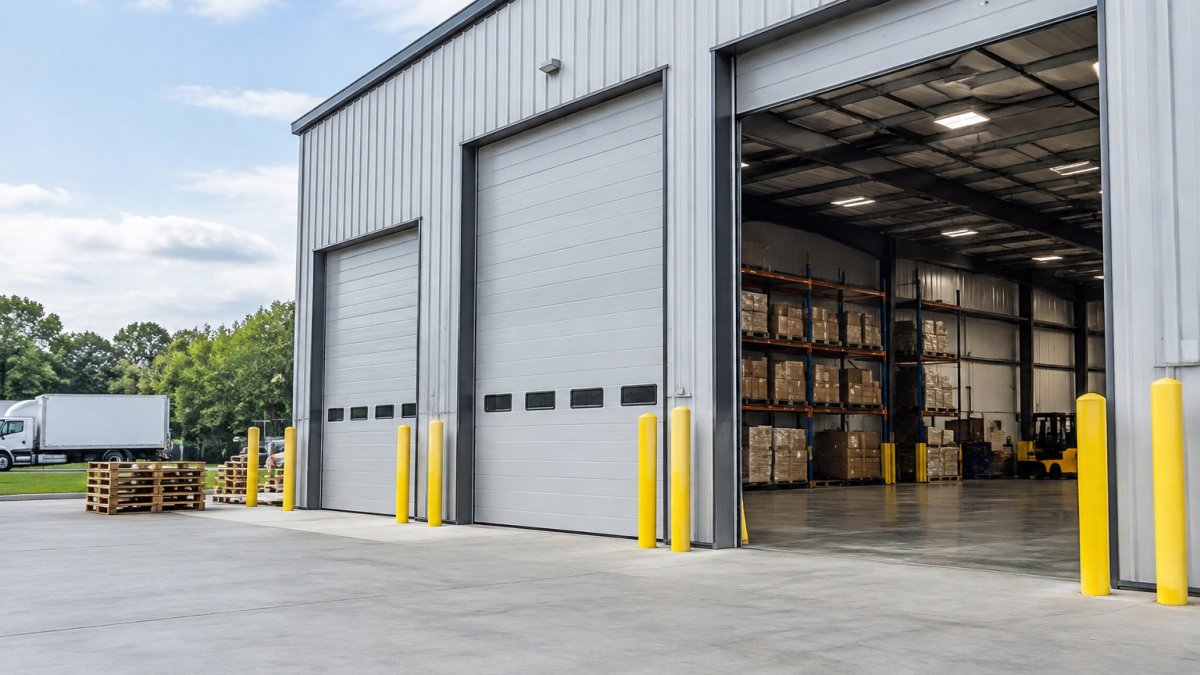
Sectional doors are made of horizontal panels that travel up a track and lie flat along the ceiling, keeping the opening clear and freeing wall space. They insulate well, handle large openings, and are a common choice for distribution centers and manufacturing floors. Their limitation is speed: a standard sectional door opens more slowly than a high-speed model, so a dock that cycles constantly may feel the delay. Sectional doors are also the most common choice where the building has adequate headroom for a standard-lift or high-lift track.
Rolling Steel Doors
Rolling steel doors wind up into a compact header above the opening. They suit spaces where headroom is limited and security matters most, since the solid curtain resists forced entry well. They take up less interior ceiling space than sectionals, but they are generally less insulated and can be slower in heavy-use settings. Rolling steel is often the practical answer for street-facing openings and secondary service doors where security outweighs thermal performance.
High-Speed Doors
High-speed doors open and close far faster than standard doors, reducing the time the opening stays exposed to the outdoors. That matters most where forklifts or carts pass through constantly and temperature control is critical. High-speed doors carry more moving parts that run at speed, so sensor reliability, safety reversal and a regular service schedule matter more here than on a slower door. They are rarely the lowest-cost option, so reserve them for openings where cycle rate or climate control justifies the premium.
Service and Swinging Doors
Service and swinging doors handle pedestrian and light cart traffic at side entrances, offices and break areas. They are not designed for forklift traffic or large clear openings, but they are the right fit for personnel flow and can include vision panels, closers and access-control hardware. Using a sectional or rolling steel door for a personnel entrance usually costs more than the traffic justifies.
A Selection Workflow Based on Site Conditions
Most buying guides stop at the door-type list. A more reliable approach is to work through the site conditions in order, because each answer narrows the field:
- Measure the clear opening. Record width and height. Confirm the space above the door for the track and the space behind it for springs and drum.
- Count cycles per day. A door that opens twice a day has different needs from one that cycles every few minutes. Cycle count is the single strongest predictor of whether a high-speed door pays back.
- Identify what passes through. Forklifts, pallet jacks, trucks and pedestrians each impose different impact, speed and safety requirements. Forklift traffic argues for reinforced tracks, impact protection and faster opening.
- Check headroom and side room. Limited headroom points toward rolling steel or low-headroom sectional track; generous ceiling space opens up standard sectional designs.
- Set the insulation and security target. Climate-controlled space needs insulated panels and well-sealed perimeters; street-facing openings need forced-entry resistance and reviewed locking hardware.
- Confirm the building use and any code requirements. Fire-rated separations, egress paths and operator-safety requirements can eliminate door types before price is discussed.
Watch out: ordering a door before measuring headroom and clearance is the most expensive error in this category. Confirm the opening and the space above and beside it before comparing models, and standardize the rest of the building only after the most demanding opening is matched.
Sectional Overhead Doors for Warehouses: Specs, Sizing and Lifecycle Cost
Sizing starts with the clear opening, but the full specification includes headroom, backroom depth and the required track configuration. Measure width and height of the opening, then confirm the space above the door for the track and the space behind it for the springs and drum. Standard and low-headroom track options exist, and the right one depends on how much ceiling clearance the building actually has.
Lifecycle cost is where sectional doors earn or lose their value. Initial installation is only part of the picture. Plan for spring replacement, track alignment, weatherstripping and panel repair across the door's life. Commercial springs are rated for a set number of cycles, so a door that cycles heavily will need its springs serviced sooner than one used a few times a day. Ask any provider for the cycle rating of the springs they are quoting.
Pricing depends on size, insulation, material and the drive system, so request a written quote for your specific opening. You can contact Eidelberg Garage Doors at 718-645-2930 to request a quote.
The table below summarises the sizing and lifecycle points for sectional doors.
| Item | Detail | Note |
|---|---|---|
| Clear opening | Width and height of opening | Measure first |
| Headroom | Space above the door for the track | Standard or low-headroom track |
| Backroom | Space behind the door for springs and drum | Confirm before ordering |
| Spring life | Rated for a set number of cycles | Heavy use means earlier service |
| Quote | Written quote for your specific opening | Pricing varies by size and drive |
High-Speed Doors for Warehouses: When Cycle Rate Justifies the Cost
High-speed doors open and close far faster than standard doors, which reduces the time the dock stays open to the outdoors. That matters most where forklifts or carts pass through constantly and temperature control is critical.
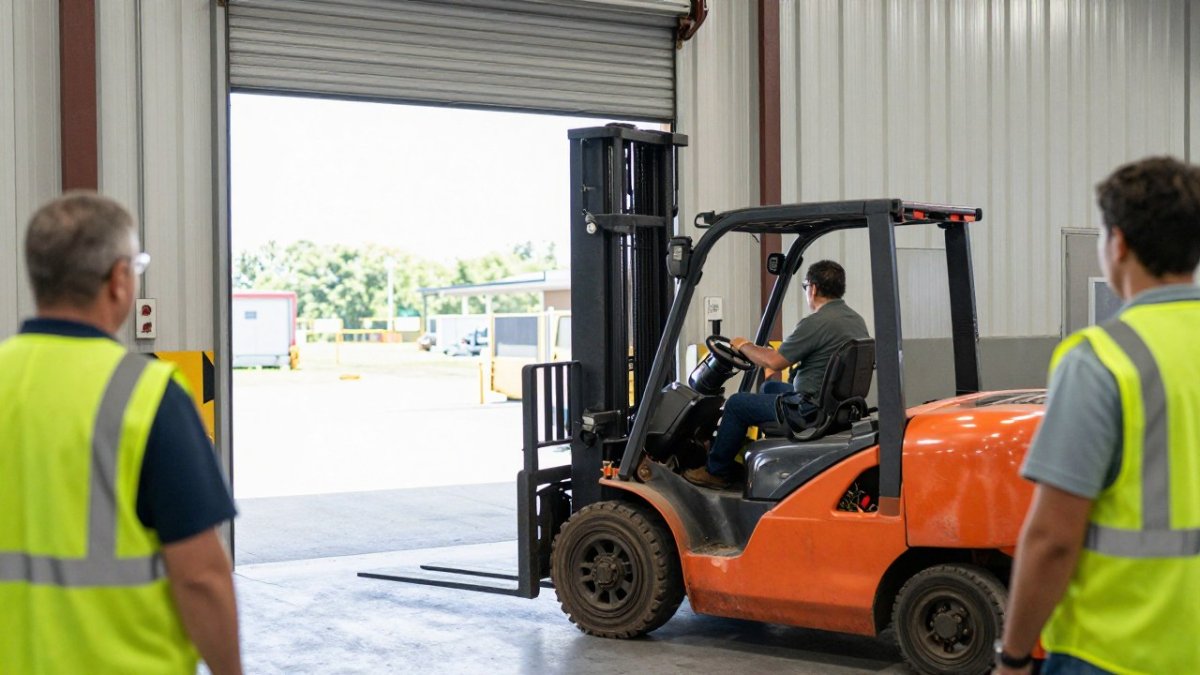
The question is whether the cycle rate justifies the premium. A door that cycles several times an hour, or where climate control costs are high, can pay back the difference through energy savings and reduced workflow delay. A door that opens a few times a shift rarely does.
Ask any provider how the door handles sensor reliability, safety reversal and the frequency of maintenance. High-speed doors carry more moving parts that run at speed, so a regular service schedule matters more here than on a slower door.
Warehouse Door Insulation, Security and Maintenance Requirements
Insulation, security and maintenance are where the door's lifecycle cost is decided. Most buying guides treat these as afterthoughts; the framework below turns them into procurement criteria you can put in a quote request.
Insulation and Measurable Thermal Performance
Insulation affects both energy bills and comfort. Insulated sectional panels and well-sealed perimeters reduce heat loss in winter and heat gain in summer. Ask for the panel's thermal rating and compare it across quotes rather than accepting "insulated" as a description. Check the bottom seal and side seals as carefully as the panels, since gaps there undo much of the insulation's value. For climate-controlled space, specify the seal type, the panel thickness and the rated thermal performance, and confirm how the perimeter is sealed at the track and header.
Security and Forced-Entry Resistance
Security depends on the door type and the locking system. Rolling steel curtains resist forced entry well, while sectional doors rely on the lock, the track hardware and the panel strength. Review locking options and reinforcement with your installer, especially for doors that face the street. Ask how the door resists lifting from the outside, whether the track hardware can be reinforced, and how access control or dock equipment integrates with the opening. A door that is secure when closed but left open during shifts provides little protection, so pair hardware with operating procedures.
Maintenance Schedules and Common Failure Points
Maintenance keeps any commercial door safe and reliable. Establish a schedule that covers springs, cables, rollers, tracks, safety sensors and seals. Commercial springs are rated for a set number of cycles, so a door that cycles heavily will need its springs serviced sooner than one used a few times a day. Ask any provider for the cycle rating of the springs they are quoting, and record the door's cycle count so service intervals track actual use rather than calendar time.
Common failure points to inspect include spring tension and cable wear, roller and hinge condition, track alignment, bottom and side seals, and safety sensor alignment. High-speed doors add more moving parts that run at speed, so their inspection intervals should be shorter than a slow-moving sectional door's. A stuck or failing door is a safety risk and a costly interruption, so ask whether emergency service is available and how quickly a technician can respond.
Safety, Code and Compliance Considerations
Door selection also has a compliance dimension that a price comparison will not reveal. Fire-rated separations, egress paths and operator-safety requirements can eliminate door types before cost is discussed. Ask your provider to confirm the door's fire rating where a rated separation is required, how the operator's safety reversal and entrapment protection work, and whether the opening must meet accessibility or egress requirements. Requirements vary by building type and jurisdiction, so verify the applicable local requirements with the authority having jurisdiction before ordering. Building this into the quote request avoids discovering a compliance gap after the door is installed.
Putting It Into a Quote Request
A practical quote request lists the opening dimensions, cycles per day, traffic type, insulation target, security needs, required fire rating and desired maintenance interval. Providers who quote against those criteria give you comparable numbers; providers who quote only a door type leave the lifecycle cost hidden. Eidelberg Garage Doors offers installation, repair and emergency service seven days a week. Call 718-645-2930 when a problem can't wait.
Booking Your Warehouse Door Assessment With Eidelberg
The best commercial doors for warehouses are the ones matched to your traffic, space and budget, and that match is easiest to find on site. Eidelberg Garage Doors has served Brooklyn and Long Island since 1945 and has more than 10,000 repeat customers. Contact us to discuss your opening and traffic patterns.
Call 718-645-2930 to schedule a warehouse door assessment with Eidelberg Garage Doors.
Frequently Asked Questions
What type of door is suitable for a warehouse?
Most warehouses use sectional overhead doors or rolling steel doors. Sectional doors suit openings where headroom allows panels to run on a horizontal track, and they are common for loading bays with frequent use. Rolling steel doors fit tight spaces because the curtain coils above the opening and takes little room. High-speed doors suit high-traffic openings that cycle many times per hour. The right choice depends on your opening size, cycle frequency, insulation needs and available headroom.
Are high-speed doors a good choice for warehouses?
High-speed doors are a strong choice when an opening sees constant forklift or cart traffic, because they open and close quickly and reduce air exchange between the warehouse and the outside. They cost more upfront than standard overhead doors, so the decision usually rests on cycle frequency, energy loss and how much a slow door costs your operation in delays. Facilities with occasional truck traffic often do not need one.
What is the difference between sectional and rolling steel warehouse doors?
A sectional door is made of horizontal panels hinged together that run on tracks along the ceiling, so it needs clear headroom above the opening. A rolling steel door uses slats that wind onto a barrel above the opening, which saves headroom but typically has less insulation. Sectional doors are generally preferred for insulated, heavy-use bays, while rolling steel doors are often used for storefronts, service openings and spaces with limited ceiling height.
How do I choose a warehouse door for frequent forklift traffic?
Start by measuring the opening and noting the forklift height, load height and traffic per hour. Choose a door with a panel or curtain rated for impact and a reinforced bottom section. Sectional doors with heavy-duty tracks and high-cycle springs hold up well to repeated use. For very high traffic, add impact protection or a high-speed door. Ask any provider for cycle ratings and warranty terms in writing before you buy.